INSPECTION LAB / PRPTY × HAUSE
How far does the evidence reach?
Move an illustrated sewer camera. Separate the length reached, image visibility and the questions footage cannot answer.
Explore the sewer-scope lesson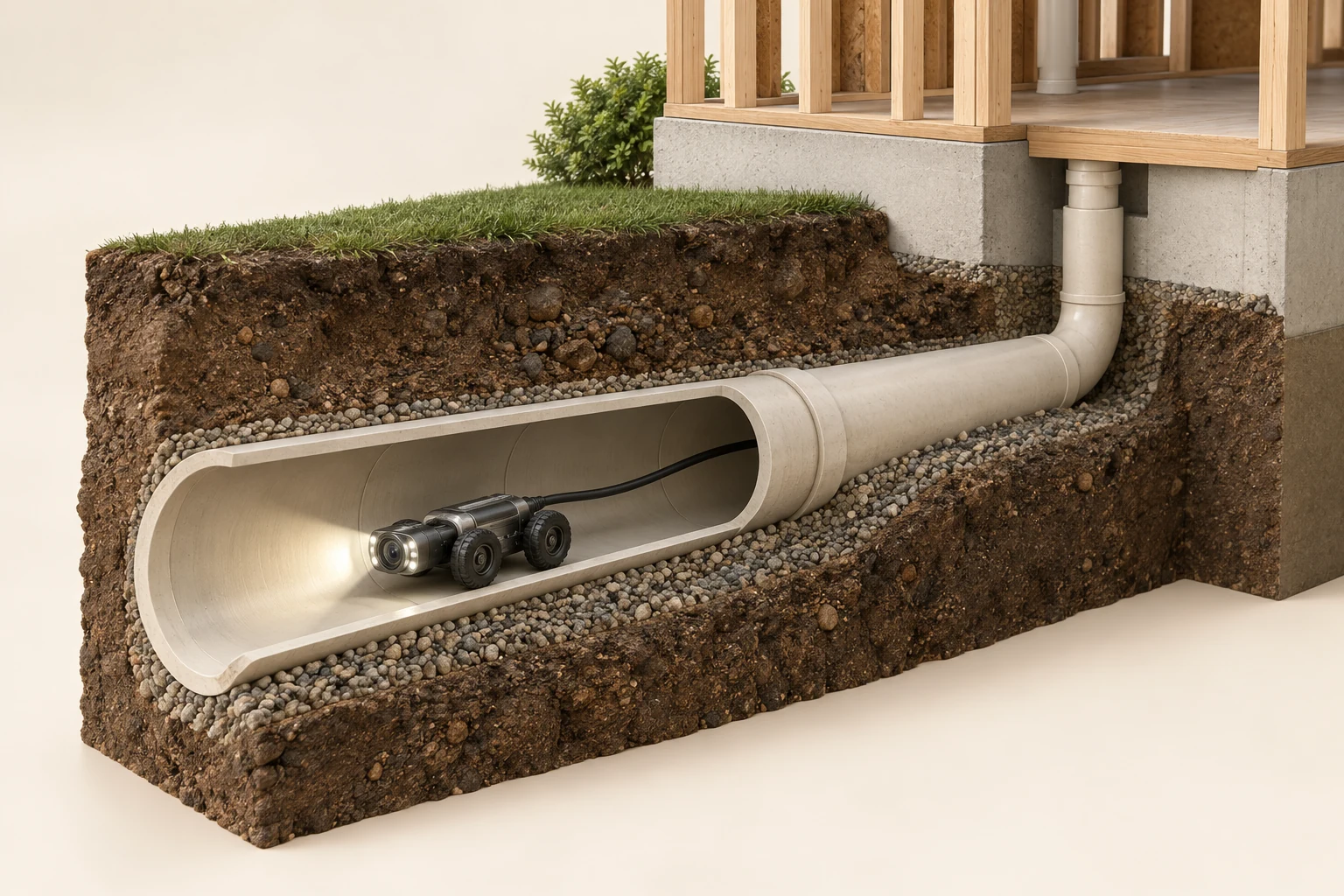
Adjust the inputs. Read the assumptions. Use the result to ask a better question—not as a diagnosis.
Follow sunlight through glass, an opaque assembly, indoor sources, the room boundary, stored energy and heat removal. Each view includes the evidence to request and the limits of the illustration.
Explore the study ↗Move an illustrated sewer camera. Separate the length reached, image visibility and the questions footage cannot answer.
Explore the sewer-scope lessonChange room conditions. Watch the temperature margin change.
Surface margin = surface temperature − dew point
NOAA vapour-pressure formulation. Approximate scenario; reflective surfaces and instrument uncertainty matter.
Compare electricity needed to deliver the same heat.
Electricity = heat delivered ÷ COP
Illustrative energy-only comparison. Excludes fixed charges, defrost, backup heat and hourly weather.
Turn two meter observations into an estimated flow.
Daily volume = (litres ÷ minutes) × 1,440
Stop all normal water uses and verify meter units. The estimate cannot locate a leak or rule out intermittent flow.
Explore slope using a vertical drop and horizontal run.
Slope % = drop ÷ run × 100 (matching units)
Geometry only. Local rules, siding clearance, property boundaries and drainage design govern actual work.
Radon can fluctuate. A representative long-term measurement asks a different question from an individual peak. This conceptual sketch has no concentration values, measured dataset or calibrated time scale.