- A visible pipe sample cannot establish the material and condition of every concealed branch.
- Knowing the safe isolation point and who operates it is part of a practical handover.
- A plumbing report and an insurer’s written terms answer different questions; neither guarantees future performance.
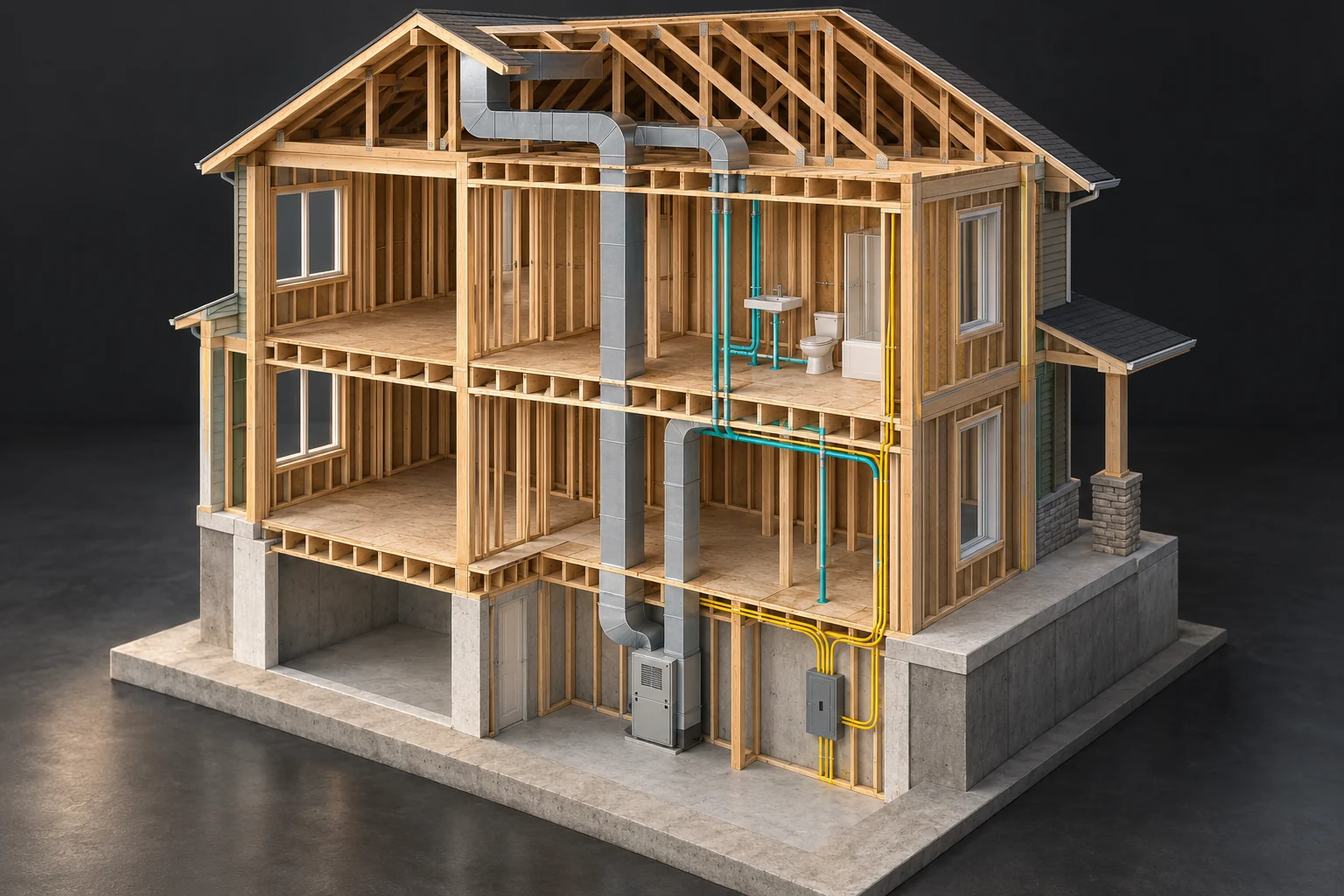
Conceptual architecture. Layout, sizes and routes are illustrative; the picture does not describe your home’s condition.
Explore this in the visual atlas ↗3 picture lessons appear beside the questions in this guide. Use them to understand the explanation, then consider what it means for your home.
Map the supply separately from the drainage
Supply piping brings pressurized water to fixtures. Drainage carries used water away. A wet cabinet, ceiling or basement may involve either system or water arriving through the building envelope. Begin the evidence file with that separation. Note where water appeared, whether it followed fixture use, whether it continued between uses and whether it followed rain. These observations help a plumber select an investigation without pretending that the visible puddle identifies its source.
Ask for the route from the water service entry through the accessible distribution piping. Record the meter location, identified valves and branches serving appliances or exterior taps where known. Confirm the local ownership boundary: Calgary, for example, distinguishes City infrastructure from the private service on the property, with the meter treated separately. That local example is not a national boundary rule. Shared services, condominiums and unusual easements need their own documentary clarification.
Water comes in; used water leaves through a different system
Supply pipes bring water to taps and appliances. After use, water leaves each sink through a drain and trap before joining the larger drainage route. The trap holds a water seal that limits gas passage into the room. Venting lets air circulate in the drainage system and helps protect those seals. Following these different jobs makes a repair record much clearer than calling everything plumbing.
Numbers identify the parts explained below.
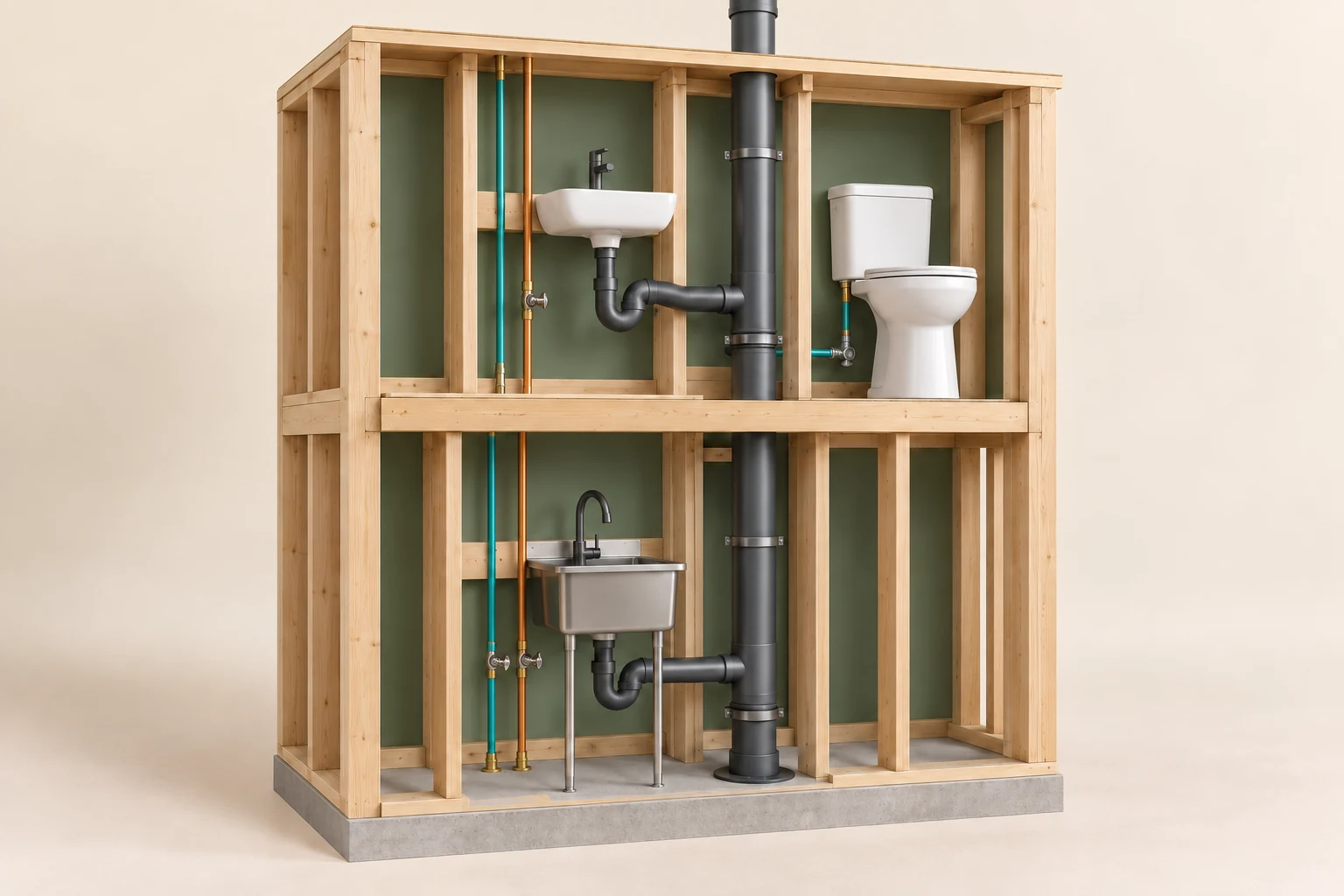
- Water supply
The narrow runs illustrate water delivery to fixtures. Incoming pressure provides the push; the drains carry used water away separately. A supply replacement record should name the branches and endpoints it covers.
- Sink trap
Water retained in an installed trap forms a barrier against gas from the drain. The curved shape helps locate that part here, but the picture does not show its retained water or establish its condition.
- Drainage and venting
The larger vertical pipe illustrates a stack carrying drainage between floors. Venting has the separate air-circulation and trap-protection job. Ask where each fixture drains and how its trap is vented; those complete connections are not drawn.
What does this illustration leave out?
The cutaway omits the tap connections, water inside the traps and a complete vent route to outside air. Pipe colour does not identify material. Ask a qualified plumber to explain the actual arrangement; this picture supplies no local design or approval. This illustration explains an idea. It is not an installation guide.
Which pipes supply this fixture, where does its used water go, and how does the actual vent arrangement protect its trap seal?
Explore this with HomeAI ↗Opens an editable question. Nothing is sent until you choose to send it.Make isolation knowledge practical and safe
Locate the main interior water shutoff with the seller, builder or qualified plumber and label it accurately. Calgary’s pressure guidance places it typically near the water meter or service entry. Confirm what it isolates and whether appliances or fire-protection systems require separate consideration. A valve visible behind storage but unreachable during a leak is a handover problem. Ask for safe access and an explanation of the relevant operating instructions.
Do not force a corroded, leaking or unfamiliar valve to prove it works. Have a plumber assess questionable isolation points and demonstrate an appropriate procedure. The municipal service valve is a separate device and should be handled under the utility’s rules. During an active supply leak, use a known, safely accessible shutoff only if you can do so without electrical or other hazards. If water is near energized equipment, keep clear and obtain emergency assistance.
Identify materials without condemning a whole home
Colour is a clue, not a complete material identification. Ask the plumber to use markings, fittings and accessible installation details, then describe which portions were actually examined. A home may contain different materials from successive renovations. Calgary’s maintenance guidance discusses Poly-B and galvanized piping and their differing concerns. It does not follow that one visible sample describes every hidden run, or that every installation with the same material has the same present condition.
For an identified material, request a property-specific assessment of visible condition, fittings, leaks, repairs and the uncertainty in concealed sections. If replacement is recommended, ask why, how much piping is included and what access and restoration are assumed. An inspection should not invent an exact remaining lifespan from appearance. Equally, a history with no reported leak is not proof of future reliability. Keep technical condition, replacement planning and insurer acceptance as separate questions.
Water comes in; used water leaves through a different system
Supply pipes bring water to taps and appliances. After use, water leaves each sink through a drain and trap before joining the larger drainage route. The trap holds a water seal that limits gas passage into the room. Venting lets air circulate in the drainage system and helps protect those seals. Following these different jobs makes a repair record much clearer than calling everything plumbing.
Numbers identify the parts explained below.
- Water supply
The narrow runs illustrate water delivery to fixtures. Incoming pressure provides the push; the drains carry used water away separately. A supply replacement record should name the branches and endpoints it covers.
- Sink trap
Water retained in an installed trap forms a barrier against gas from the drain. The curved shape helps locate that part here, but the picture does not show its retained water or establish its condition.
- Drainage and venting
The larger vertical pipe illustrates a stack carrying drainage between floors. Venting has the separate air-circulation and trap-protection job. Ask where each fixture drains and how its trap is vented; those complete connections are not drawn.
What does this illustration leave out?
The cutaway omits the tap connections, water inside the traps and a complete vent route to outside air. Pipe colour does not identify material. Ask a qualified plumber to explain the actual arrangement; this picture supplies no local design or approval. This illustration explains an idea. It is not an installation guide.
Which pipes supply this fixture, where does its used water go, and how does the actual vent arrangement protect its trap seal?
Explore this with HomeAI ↗Opens an editable question. Nothing is sent until you choose to send it.Distinguish pressure from usable flow
Pressure is not the same observation as how much water a fixture delivers while operating. A restriction can reduce usable flow even when a pressure reading taken with fixtures closed appears adequate. Internal corrosion can narrow a pipe’s available passage, while an individual fixture can have its own restriction. If one tap performs poorly, the concern may be localized. If several fixtures are affected, the service and distribution system deserve broader review. Calgary’s guidance uses the extent of the problem to help direct investigation. Record which fixtures were used, whether they were used together and whether the pattern changes over time. Do not diagnose pipe condition from a single briefly opened tap.
Ask a qualified plumber what measured checks would distinguish restrictions, supply conditions and valve problems in this property. A report should identify test locations and operating conditions so a later professional can compare results. If visible corrosion or recurring leakage accompanies poor performance, include photographs and prior work records. Do not adjust a regulator or change a water-heater setting based on an online rule. The equipment, plumbing arrangement and applicable requirements need competent assessment.
Visible condition cannot establish drinking-water quality
Lead exposure can involve the service line and components within the home. Health Canada explains that appearance, taste and smell do not reliably identify lead in drinking water. Where the service material or history raises a question, contact the local water utility and follow appropriate testing guidance through an accredited laboratory. Ask what sampling procedure is required for the question being investigated; an unlabeled sample without its collection conditions is difficult to interpret.
Keep utility records, confirmed material information and laboratory results together, noting the date and sampling conditions. A normal result from one sample should not be expanded into a universal statement about every tap and future condition. Ask the utility or qualified specialist to explain limitations and any recommended mitigation. If a service or plumbing replacement is undertaken, ask what follow-up guidance applies. Do not assume that a cosmetic kitchen renovation also replaced the buried service.
Describe the water event before asking about coverage
Insurance treatment depends on the cause and policy. A burst supply pipe, sewer backup and water entering over land are different events. The Insurance Bureau of Canada notes that sewer-backup and overland-water protection can involve optional coverage. A phrase such as water damage covered is therefore too broad to guide a purchase. Ask the insurer or broker which causes are covered, what exclusions and deductibles apply and what requirements they attach to this property.
For a past event, collect the date, identified source, repair scope and restoration evidence. Separate what the owner observed from what a plumber or restoration professional confirmed. Note if the cause remains unresolved. A patch of new drywall alone does not establish that the source was corrected or concealed materials were assessed. Supply the factual history requested by the insurer and your advisers; do not soften it into a generic statement that a small leak was fixed.
Prepare a file the insurer can evaluate
Include positively identified piping materials, the extent of any replacement, available permits and invoices, leak history and the relevant professional reports. If a report says material unknown behind finished walls, retain that wording. Ask the insurer what additional evidence it requires and whether any proposed repair must be completed before coverage begins. Confirm the effective date and written terms with the provider. A contractor’s opinion that homes like this are insured is not a decision on your application.
An insurer may request risk controls or have different requirements from another provider. Ask what a proposed leak sensor or automatic shutoff would and would not address, who should install it and whether the provider recognizes it for the relevant purpose. Such equipment cannot eliminate every possible leak or guarantee a claim outcome. Keep the provider’s actual answer in the file instead of treating an advertisement or a neighbouring homeowner’s experience as an assurance.
Use the file before and after the sale
A buyer should obtain the plumbing evidence early enough to seek the required specialist and insurer review before relying on assumptions. Compare replacement quotations on the same defined scope, including finishes and any unverified service segment. Discuss unresolved cost, access and timing with your transaction advisers. The objective is to make an informed decision about this property, not reject or approve a whole category of homes by pipe colour.
A seller can improve the handover by identifying known valves, supplying complete repair records and accurately describing any partial replacement. A new-home owner should obtain the installed materials and service information from the builder rather than infer them from the home’s age. After possession, maintain safe access to isolation points and preserve future service records. When the next issue occurs, that baseline lets a qualified professional investigate a change instead of first reconstructing the whole water system.
Add source-water evidence when the supply is private
A plumbing-material record and a water-quality report describe different parts of the supply. If the home uses a well or another private source, identify the actual source, treatment path and sampling locations. A result from a kitchen device may not describe water elsewhere, and a bacteria panel does not assess every chemical question. Obtain full reports and appropriate public-health interpretation rather than treating clear appearance or a neighbour’s result as evidence for this home.
Ask which water-quality questions relate to the source and which may relate to plumbing or treatment. A qualified provider can explain what additional sampling or records are useful without assuming that all pipes need replacement. Keep the source and equipment history attached to the insurer’s or lender’s actual request. No single document guarantees potability, coverage or the future performance of the complete system.
The source, the treatment and the land
The scene distinguishes a water source from a wastewater route and its land context.
Numbers identify the parts explained below.
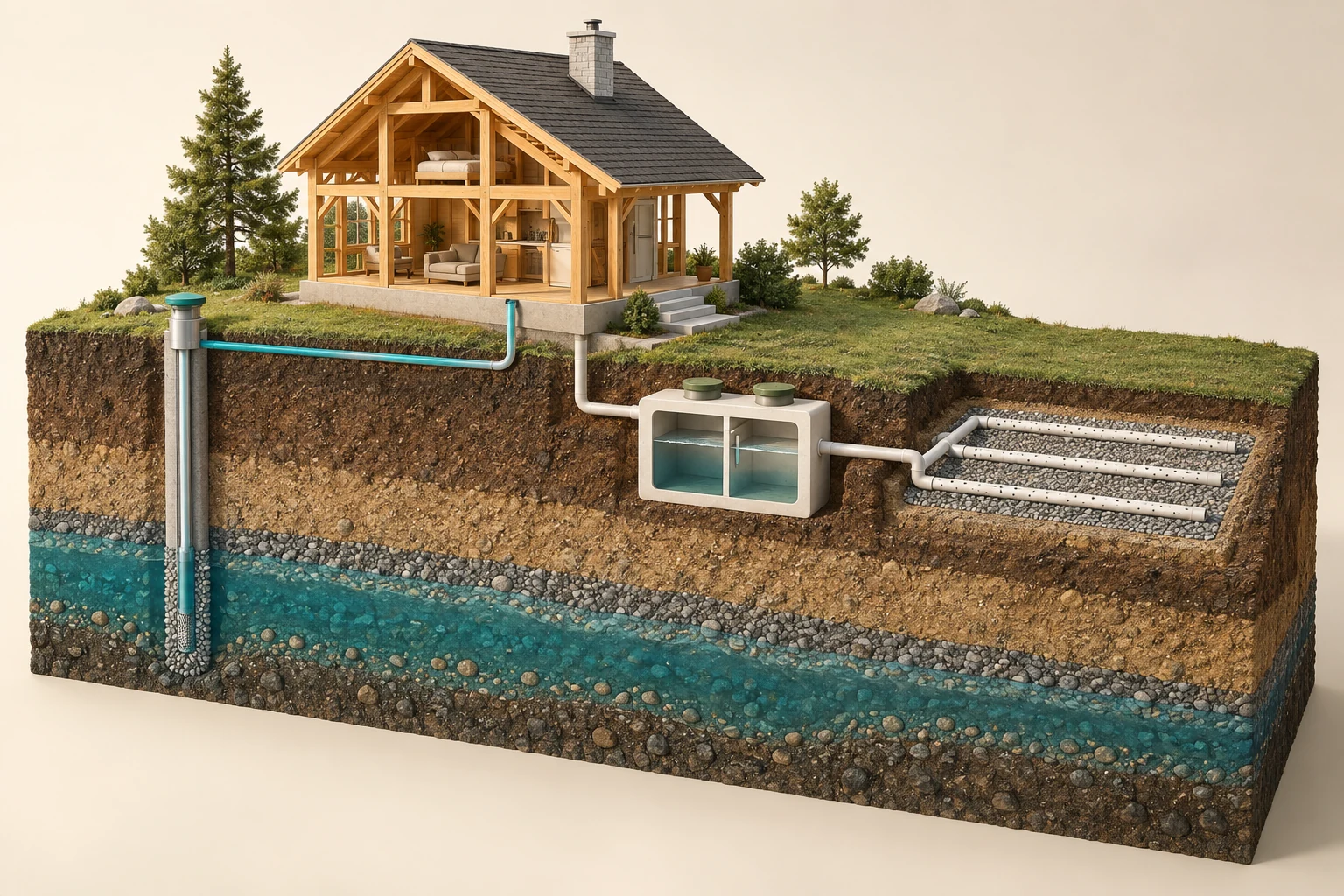
- Water source
Identify the actual source and sampling scope.
- Wastewater route
Records and an appropriate assessment establish the installed system.
- Land context
A visible layout is not a permitted location or an isolation-distance design.
What does this illustration leave out?
Actual locations, isolation, capacity, setbacks, groundwater and sample results are not supplied. This illustration explains an idea. It is not an installation guide.
Which site records, sample details and scoped assessments explain these rural services?
Explore this with HomeAI ↗Opens an editable question. Nothing is sent until you choose to send it.Provide the insurer with a precise system description
Ask what information the insurer requires for this address and intended use, then supply the matching records with their qualifications. Identify the material, location and extent of any documented work; distinguish visible confirmation from concealed or unassessed portions. A local contractor’s invoice is not a universal acceptance letter, and an insurer’s question about a material is not a technical diagnosis that every installation of that material has failed.
If further work or assessment is proposed, obtain a scoped recommendation and written coverage response through the appropriate professionals. Preserve the original dates and findings when the dossier changes. Do not remove a report qualification to make the summary appear insurance-ready. HomeAI can help organize the evidence and clarify the next question, but insurability and policy terms belong to the actual insurer, and technical condition belongs to the appropriately scoped assessment.
Keep learning about the connected parts
Well water and wastewater are different systems.
An open timber house above a soil section, with a capped well and a separate sectioned tank. A teal house-water route and a pale wastewater route toward parallel field laterals. Illustrative ground layers and a blue-green subsurface water-bearing layer.
The evidence the illustration cannot supply
Water quality, well construction, yield, protection and appropriate treatment. Septic inspection history, approvals, soil treatment performance and actual operation. Site boundaries, appropriate separation, groundwater conditions and local requirements. This is a separate conceptual teaching house, not another view of a surveyed property.
Practice the distinction.
A water result and an insurance answer have different scopes
A fictional buyer receives a private-well laboratory result and wants coverage advice for an older plumbing system.
Reported observations
- The report covers a named sample and laboratory panel.
- No insurer response for this address and proposed coverage is supplied.
Compare the explanations
Expand each possibility to see the evidence needed to distinguish it. Similar symptoms can have different mechanisms.
Water-quality evidence
The laboratory result may help answer the sampled quality question without assessing all plumbing or supply capacity.
Full panel, sample conditions, supply identity and qualified interpretation.
Coverage still unconfirmed
The insurer may need property-specific plumbing and other information before giving its answer.
The insurer’s actual written requirements and response, with requested assessment records.
A useful next question
Keep quality, distribution condition and coverage questions separate while obtaining the relevant qualified and insurer responses.
The scenario does not condemn a pipe material, guarantee insurability or establish a need to replace plumbing.
Know what the words mean.
- Supply-path identity
- The documented source, treatment and plumbing route serving the relevant outlet.
- Coverage response
- The insurer’s actual written answer for the specific property and requested protection.
Questions to bring
to the conversation.
- Which supply materials and service-line segments have been positively identified, and which remain unknown?
- Where are the safe isolation points, and has a qualified person assessed questionable valves?
- What leak, repair and replacement evidence belongs to this property?
- Has the insurer reviewed the actual materials and history and confirmed the applicable terms in writing?
Separate a showing observation, an existing record and a new professional assessment. Unknown means a question remains; it does not automatically mean a defect.
Use the evidence planner ↗Go to the source.
Original HomeAI explanation informed by these public references. Sources support the underlying guidance; they have not reviewed or endorsed HomeAI. Diagrams are conceptual, and calculator outputs depend on your inputs.
Publication & source review
First published .
- City of Calgary · Water service lines and ownership
- City of Calgary · Home plumbing materials and maintenance
- City of Calgary · Understanding water pressure
- Health Canada · Drinking water and lead
- Insurance Bureau of Canada · Spring water damage and insurance
- Health Canada · Test your well water
- Health Canada · Treat your well water
- Government of Alberta · Alberta water wells web application
Have a question about your home?
Start with the symptom, timing and what you have observed.
Ask HomeAI