- A new finish can cover an older layer. Use records and qualified assessment to identify materials affected by your plans.
- Disturbing asbestos-containing material and deteriorating lead paint create different questions. Leave suspected materials alone and arrange appropriate help.
- Match every result and completion document to its location and work area. Keep unanswered questions with the purchase and renovation plan.
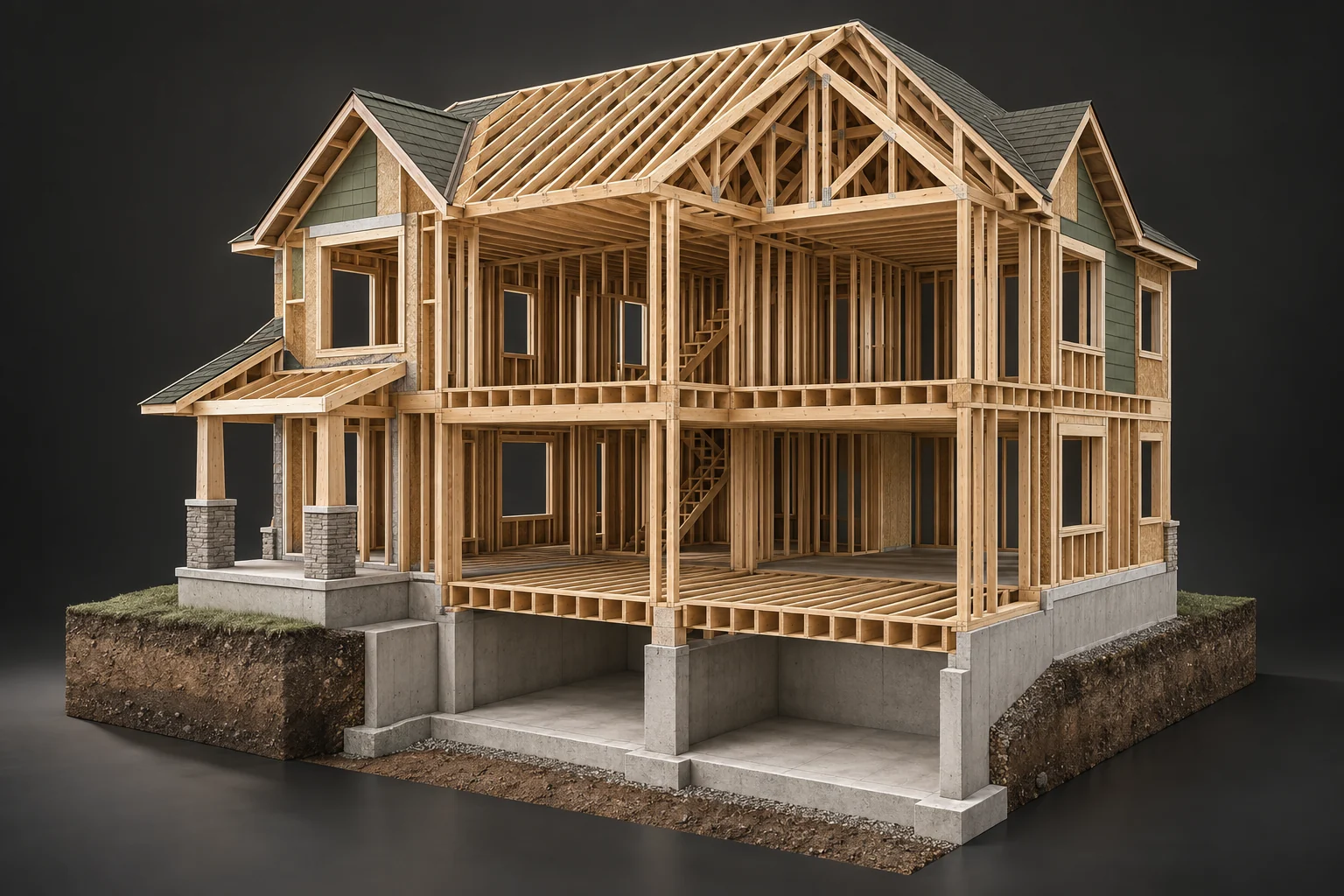
Conceptual architecture. Layout, sizes and routes are illustrative; the picture does not describe your home’s condition.
Explore this in the visual atlas ↗4 picture lessons appear beside the questions in this guide. Use them to understand the explanation, then consider what it means for your home.
What can an older home's finishes tell you?
A home can have a new floor, old walls and an addition built years after the original house. The date in the listing is a starting point for questions, not a description of every material. A fresh surface can cover an older layer. Ask what changed in each room and request the documents for that work.
Start with what you can see safely: a painted ceiling, floor covering, pipe wrapping or damaged finish. Give it a room and location. “Textured ceiling in the front bedroom” is a useful description. Calling it an asbestos ceiling needs an actual material assessment. A photograph or familiar pattern cannot supply that finding.
Explain your plans early. Leaving the room as it is, refinishing a surface and removing a wall are different projects. A specialist needs to know both the present condition and the work you want to do. That keeps the investigation tied to your purchase rather than turning the home’s age into a general alarm.
A finished room can still contain older layers
The finished room tells you what its surfaces look like today. The papers introduce a separate question about what changed and which materials the work involved.
Numbers identify the parts explained below.
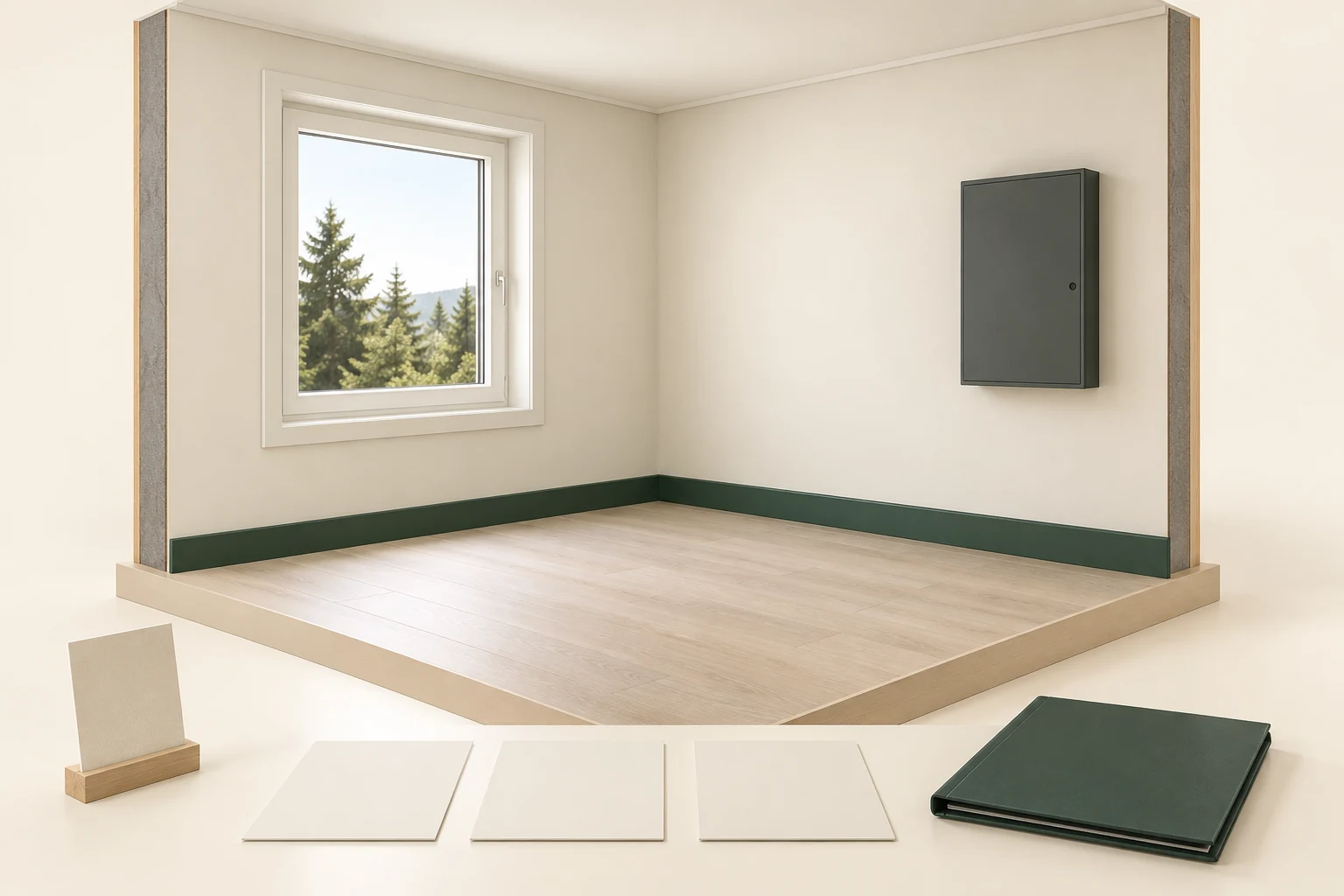
- Visible finishes
Name the room and surface you observed. A new-looking finish cannot identify every layer underneath.
- Work history
Ask for the scope and dated records of changes to that room.
- Your renovation plan
Tell the assessor which surfaces your intended work could affect. Different plans can need different answers.
What does this illustration leave out?
Blank papers contain no assessment or approval. The room appearance establishes no asbestos, lead, material clearance or completed remediation. Keep suspected materials undisturbed and use qualified assessment rather than owner sampling.
What should I ask about older materials beneath new finishes before buying or renovating?
Explore this with HomeAI ↗Opens an editable question. Nothing is sent until you choose to send it.Why does cutting or removing a material change the risk?
A finish usually stays in place while you use the room. Cutting, drilling, sanding or pulling it apart changes that situation: material can be released as dust or fibres. This is why a renovation plan matters when asking about older materials. A surface that looks tidy today may still need assessment before it is disturbed.
Health Canada advises avoiding disturbance of materials that may contain asbestos and hiring a professional to test before relevant renovation work. During a showing, leave surfaces and concealed layers alone. Do not lift flooring, scrape paint, drill a ceiling or move insulation to get an answer. Describe the question and arrange the appropriate assessment with permission.
Health Canada distinguishes undisturbed, sealed or tightly bound asbestos-containing materials in good condition from material that is damaged or disturbed. This helps explain why leaving a room unchanged and demolishing it are different questions. It is general guidance, not an assessment of the pictured room or your home.
The assessment should explain what was identified, its location and how the proposed work could affect it. Identification, condition and possible exposure are separate questions. For example, a result for one floor layer does not describe the ceiling or every room. Ask the assessor which parts of your project the report addresses and which still need attention.
Your project may reach beyond the visible finish
The cutaway displays wall and floor layers that a finished room could conceal. An assessor needs your proposed work to decide which locations and layers matter.
Numbers identify the parts explained below.
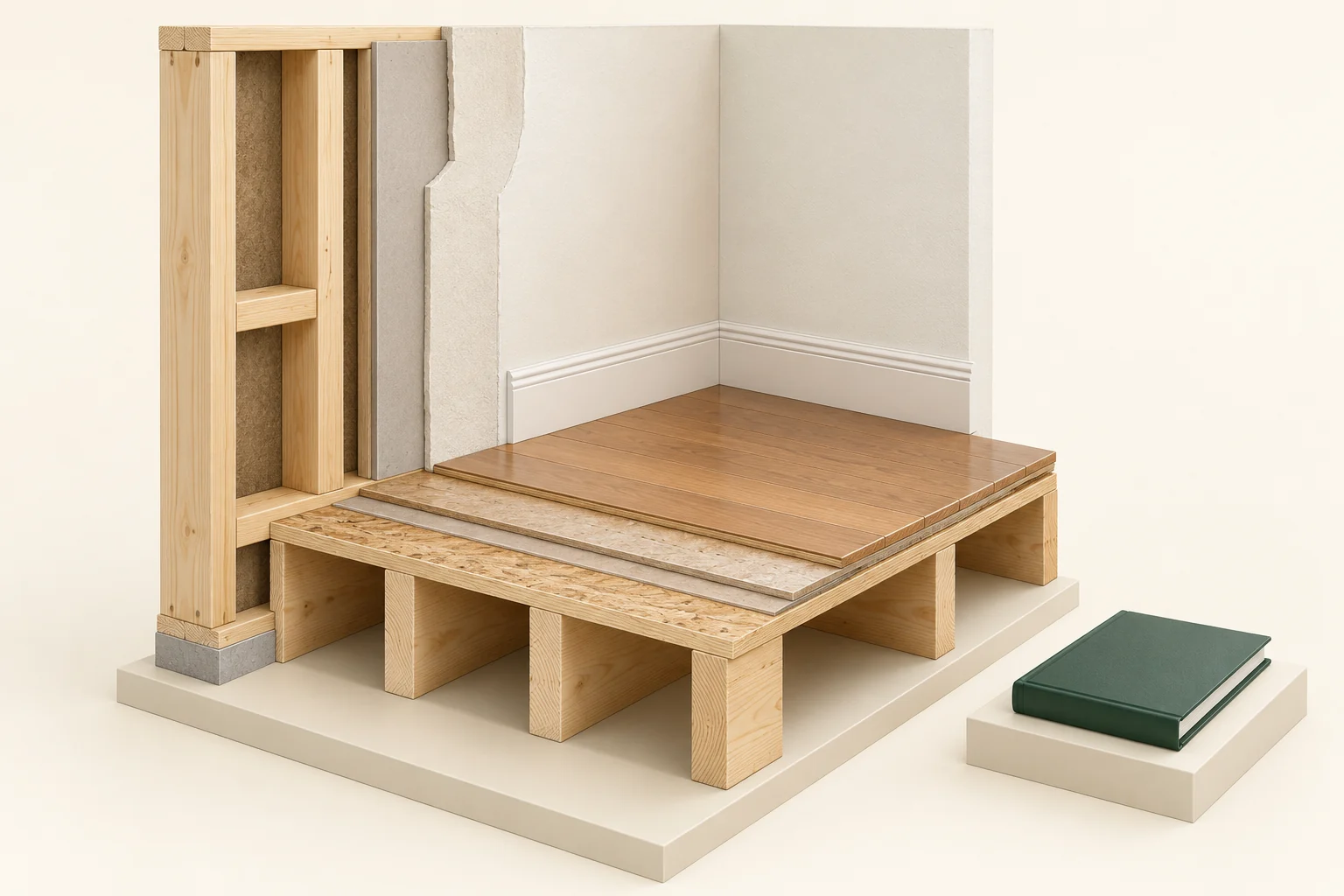
- Wall layers
A painted surface and the material behind it are separate questions when wall work is planned.
- Floor layers
A new surface can cover an older layer. Ask whether the assessment covers what your project would affect.
- Project description
Keep the rooms and intended work with the assessment. A changed plan can leave additional questions.
What does this illustration leave out?
The clean cut edges are virtual teaching sections. They identify no actual material, hazard, exposure, safe removal method or assessed layer in a real house. Do not expose layers, cut materials or collect samples to copy the illustration.
Does this material report cover all the layers my renovation would disturb?
Explore this with HomeAI ↗Opens an editable question. Nothing is sent until you choose to send it.How are asbestos and lead paint different?
Asbestos is a group of fibrous minerals historically used in a range of building products. The concern is breathing fibres that can be released when asbestos-containing material is disturbed. Lead is a different substance: older paint can contain it, and deteriorating paint or work on it can create hazardous chips and dust. A test for one does not answer the other.
Paint wear matters as well as renovation. Health Canada identifies chipping or flaking lead paint, and painted surfaces within children’s reach, as particular concerns. Tell the assessor about visible deterioration and intended room use. Ask for advice matched to the actual coating and location; do not sand or scrape it to find out what it contains.
Health Canada describes laboratory analysis and a contractor’s appropriate X-ray equipment as ways to investigate lead in paint. The provider should explain which method fits the surface and question, and how the result relates to your work. This is not a request to chip paint yourself. Keep the tested location and professional interpretation with the result.
Read any result with its sample or surface location and the professional’s explanation. “No asbestos found in the submitted floor sample” is a different statement from “no lead in bedroom paint.” Keep the whole report, including its method and limits. The important answer is which materials your planned work could affect and how qualified professionals recommend managing them.
Paint and pipe insulation answer different questions
The left sample introduces a coating question; the right introduces an insulation question. Their different jobs help you ask for the appropriate material assessment.
Numbers identify the parts explained below.

- Coating
Paint on a surface has its own condition and planned-work questions. Appearance cannot establish lead content.
- Pipe insulation
The jacket introduces a different material location. A paint result does not answer what this insulation contains.
What does this illustration leave out?
Neither intact generic sample is an identified lead or asbestos product. The image contains no sample result, hazard finding, removal procedure or safety clearance. Leave suspected coatings and wrapping undisturbed; qualified professionals should select the assessment method.
How do asbestos and lead-paint assessments differ, and which materials does my report actually cover?
Explore this with HomeAI ↗Opens an editable question. Nothing is sent until you choose to send it.Two different material questions
- AsbestosAsk which material and location were assessed, what was identified, and how your planned work could affect it. Appearance alone is not identification.
- Lead paintAsk about the assessed coating, its condition, intended use and planned work. An asbestos result does not answer this paint question.
- For either concernKeep the full report and qualified advice. Do not collect samples or disturb material during a showing.
What should you do about unfamiliar attic insulation?
Insulation slows heat movement, but different products can look similar in a distant photograph. Health Canada warns that vermiculite-based insulation may contain asbestos. That warning is a reason to seek qualified identification when relevant, not a way to identify every loose or granulated material by appearance.
Do not enter an attic, move insulation or collect a sample to settle a buying question. Ask for existing material reports and describe the area from information already available safely. Where vermiculite insulation is present, Health Canada advises against disturbing it or using the attic for storage. Discuss access and any planned attic work with a qualified professional.
A room renovation may not have involved the attic at all. Likewise, an assessment of one accessible area may leave insulation elsewhere unassessed. Request a location plan or other clear description of what the assessor covered. If access was unavailable, keep that question open in your buying notes rather than interpreting it as either a positive result or a clearance.
Unfamiliar attic fill needs identification, not a guess
Loose-looking fill sits between the joists in this outside view of an invented attic. The hatch is closed; the drawing makes no material identification.
Numbers identify the parts explained below.
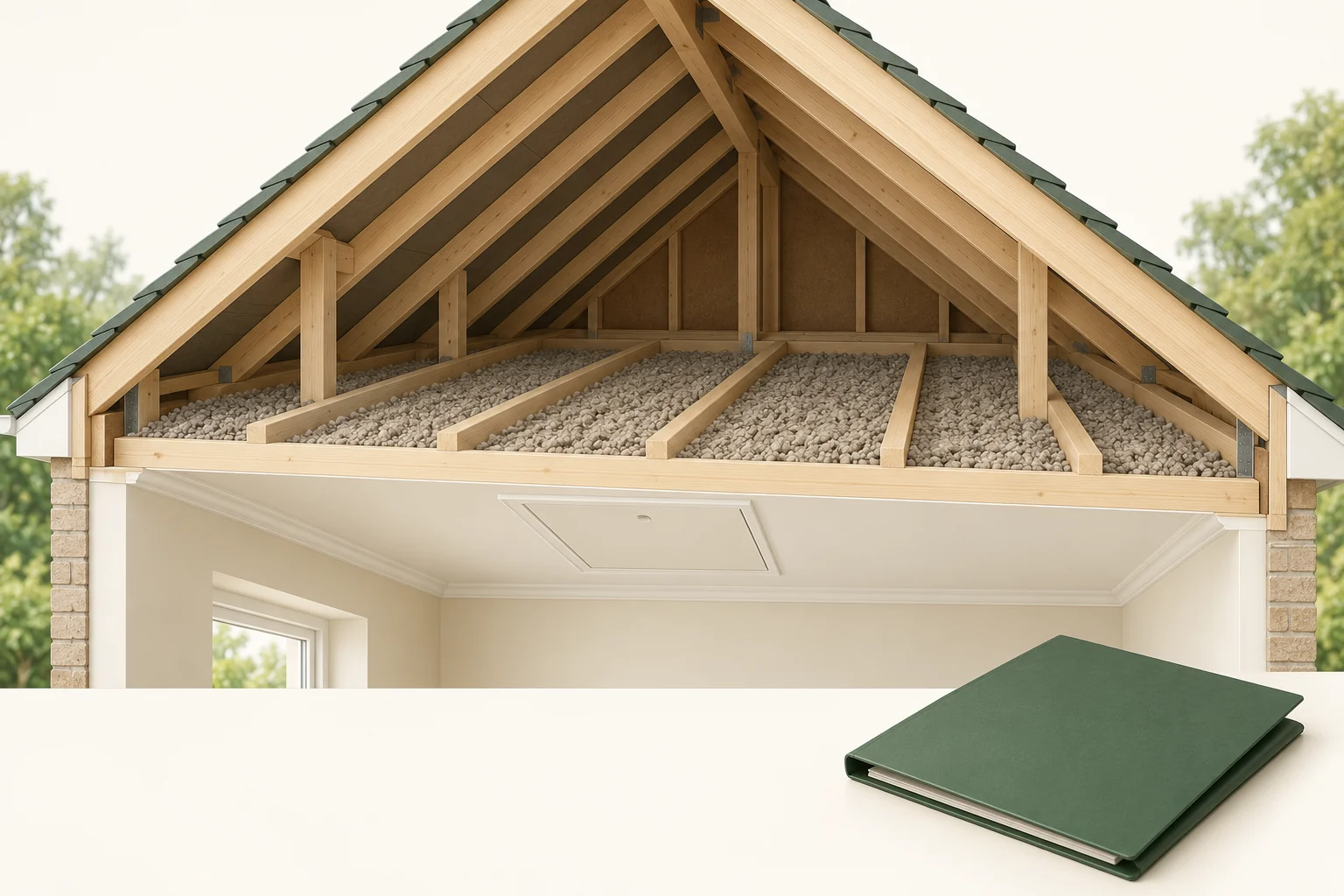
- Unidentified fill
Describe existing safely obtained information and ask for relevant material reports. A photograph is not identification.
- Closed access
Do not enter, move insulation or collect a sample to settle a purchase question.
- Assessment scope
Ask which attic areas the actual report covers and whether your planned work needs further authorized assessment.
What does this illustration leave out?
Granular appearance identifies no product or asbestos content. This roof section provides no access plan, sampling procedure, exposure finding or completed assessment. Keep suspected materials undisturbed and discuss appropriate access with a qualified professional.
What should a buyer do about unfamiliar loose attic insulation before planned work?
Explore this with HomeAI ↗Opens an editable question. Nothing is sent until you choose to send it.Does the report cover your planned renovation?
Match the work you want to do with the work the assessor reviewed. Name the rooms and surfaces: replacing the kitchen floor, making an opening through a wall or altering a ceiling. Include any changed plans. A report prepared for one small repair can remain accurate while leaving a larger renovation unanswered.
For a flooring project, ask whether the assessment covered only the visible finish or also the layers the contractor expects to disturb. For wall work, ask which walls and relevant materials were included. Let the assessor choose appropriate investigation methods. The picture explains why layers matter; it does not tell you how to expose or sample them.
Requirements depend on where the work takes place. WorkSafeBC’s current homeowner guidance calls for licensed asbestos surveyors and licensed asbestos abatement contractors for the relevant work in British Columbia. That is a BC example, not a Canadian credential for every province. Ask the project’s professionals and local authorities what applies at this address.
The linked NRC codes FAQ is archived. It helps explain the difference between a national model code and local requirements, but it cannot establish the current rules for your project. Request current advice about permits and applicable requirements from the responsible authority. Keep that answer with the renovation scope.
What proves that removal work was completed?
“The asbestos was dealt with” is a summary that needs its supporting documents. Ask for the original assessment, the defined work area, the contractor’s scope and the completion report. Have the responsible specialist explain what was contained or removed and what verification applied to that work. Keep these documents together.
Each record has a job. A laboratory result describes the submitted sample. An assessment connects findings to the property and proposed work. A contractor’s invoice describes billed work. A completion or follow-up report addresses its stated work area and methods. One document may be useful without replacing the others.
Check the rooms, materials and dates across the file. If the report concerns a bathroom and you plan to open a kitchen wall, ask whether additional assessment is needed. Where records disagree, ask the provider to clarify the specific difference. A result for one location should stay attached to that location; it is not a permanent whole-house safety guarantee.
Read the documents in sequence
- AssessmentWhich materials and locations were investigated, by what methods, for which proposed work?
- Laboratory resultWhich submitted sample was analysed, and how does the assessor link it to the location?
- Contractor scope and invoiceWhat work area and tasks were agreed or billed?
- Completion and follow-upWhat was confirmed for that work, using which methods and limits?
What about smells, dust and household health?
Dust or a smell can raise a useful question, but neither identifies asbestos, lead or a particular chemical. Some products release gases into indoor air; this is called off-gassing. Health Canada’s building-material guidance discusses emissions from furnishings, glues and finishes as a different issue from fibres or paint dust released by disturbance.
Record the room, what recently changed and when you noticed the concern, using information already available safely. Tell the professional about the planned use and any occupants whose needs affect the assessment. Ask which investigation would answer that specific question before ordering an assortment of tests.
For symptoms or a possible exposure, seek advice from an appropriate healthcare professional or public-health authority. A building report cannot diagnose a person. Keep any material finding, the assessment of how exposure might occur and medical advice in their own roles. This makes it easier to choose the right help without guessing a cause from a showing.
How do you make a buying or selling decision?
Bring the findings back to your plans. Can the affected room remain in its present use? What assessment or specialist work is needed before the renovation you want? Ask for proposals based on the actual work area, access and restoration, with the remaining unknowns stated clearly. A general online removal price will not describe that project.
If an important answer cannot arrive before your decision deadline, ask your realtor and legal professional what options your actual agreement allows. Ask the lender or insurer about any requirements they have for this property. A material finding does not, by itself, determine the contract, insurance or financing outcome.
Sellers can help by supplying the full records and an accurate description of the work. Buyers should keep those records for future repairs. In the fictional flooring example below, a new-floor invoice is useful history, but the underlying layer still needs an answer before removal. HomeAI can explain the documents and help prepare questions; identification and hazardous-material work need qualified professionals.
Keep learning about the connected parts
Practice the distinction.
A new floor, an older layer and a changed renovation plan
Fictional example: Leila is considering an older home with recently installed kitchen flooring. She wants to replace that floor and later extend the work into the hall.
Reported observations
- The supplied invoice describes the new kitchen floor but not the layers beneath it.
- No material assessment has been supplied for the proposed removal.
- The hall is part of Leila’s proposed project but outside the kitchen invoice.
Compare the explanations
Expand each possibility to see the evidence needed to distinguish it. Similar symptoms can have different mechanisms.
The invoice answers a narrower question
It may accurately record the new kitchen finish while leaving the underlying layers and hall unanswered.
The original installation scope and a qualified assessment matched to the planned removal.
The wider project needs a wider assessment
Extending work into the hall changes the locations to consider. It does not establish that any material contains asbestos or lead.
The assessor’s explanation of which rooms and layers the revised project requires them to address.
A useful next question
Leila gives the assessor the kitchen-and-hall plan, requests appropriate authorized assessment before disturbance, and keeps the remaining questions with her purchase decision.
This invented example provides no actual sample result, identified hazardous material, exposure finding or completed remediation.
Know what the words mean.
- Identification
- A finding about what an assessed material contains, tied to the tested location and method.
- Disturbance
- Cutting, moving, damaging or removing material in a way that can release dust or fibres.
- Verification scope
- The work area, conditions and methods covered by a completion or follow-up check.
- Assessed work proposal
- The rooms, materials and intended work given to the assessor. Compare any later design change with that original plan.
- Unassessed layer
- A layer that the available assessment did not identify. It still needs an answer if your work could affect it.
Questions to bring
to the conversation.
- Which room, surface or layer are we asking about, and what was actually observed?
- What work do we want to do, and which materials could it disturb?
- Does the full assessment describe those locations, methods and any unassessed areas?
- Which qualified professionals and local requirements apply to this project?
- Do the completion documents match the exact work said to have been done?
Separate a showing observation, an existing record and a new professional assessment. Unknown means a question remains; it does not automatically mean a defect.
Use the evidence planner ↗Go to the source.
Original HomeAI explanation informed by these public references. Sources support the underlying guidance; they have not reviewed or endorsed HomeAI. Diagrams are conceptual, and calculator outputs depend on your inputs.
References read for this guide on October 5, 2026. The NRC Codes Canada FAQ is archived and supplies historical model-code context only. It cannot establish current local requirements. WorkSafeBC licensing guidance applies in British Columbia. Health Canada’s lead-paint page displays an October 2, 2026 modification date.
Publication & source review
First published .
Sources reviewed .
- Health Canada · Asbestos and your health
- Health Canada · Lead-based paint
- Health Canada · Pollutants from furniture and building materials
- National Research Council Canada · Codes Canada frequently asked questions
- WorkSafeBC · Homeowner asbestos assessment and renovation responsibilities (British Columbia)
Where this reference applies
Jurisdiction: British Columbia; source retrieved October 2, 2026
Qualified/licensed assessment and abatement roles, location report, maintenance inventory and disturbance before work. No nationwide procedure, homeowner sampling or removal instructions.
Have a question about your home?
Start with the symptom, timing and what you have observed.
Ask HomeAI